Showing posts with label Activism. Show all posts

Wednesday, November 21, 2007

Project Native: Growing from the Heart


Project Native is a native plant nursery and more in the Berkshires of Massachusetts. Native plants, as their website explains, are "species that grew in this region prior to European settlement." The operation sits on a 54-acre farm in the town of Housatonic, and its all-female crew of eight runs a host of programs, like educational outreach and a seed bank (you can read more below!). Its mission? All about inspiring "the stewardship of natural communities" and "connecting people to nature and through that empowering [them]," says Raina Weber, the twenty-seven-year-old founder and executive director of Project Native. Recently, this dynamic woman took a break from her work to share her story and advice for girls with us. I have to put her advice for girls who want to start a project young (she began it at 19) right here, right up front, because it gives goosebumps it's so good:

We all have this gut instinct of knowing something what will work, and as long as it’s coming from a good place, a good solid place, a place from love and kindness, it will work. Just keep that motivation and keep hold of that passion, and you’ll persevere. You’ll have support. You’ll find support. Don’t be afraid to ask for help. That’s what adults are for, and a lot of them are really willing to give that energy. I see a lot of young people tend to be like, “I can do it. I don’t need your help.” Quite the contrary--we can learn from people who have lived longer and have had more experiences. As long as we hold onto our gut instinct, and make sure that it becomes our project and we don’t do whatever people tell us to, we can really utilize that advice. Also, there will be rocks in the road. That’s normal, that’s life. Just keep persevering.

Wow. Thanks, Raina! Read on for the rest of the inspiring interview! And by the way, if you're a girl (or anyone) who lives in the area and would like to help out, they offer flexible internships and volunteer positions--whatever you can make work. Their contact information is at the end of the post.


(For photo credits, see end.)

About Raina's Job

New Moon: You’re executive director of Project Native. Does that mean that you get to
spend a lot of time outdoors?

Raina Weber: Unfortunately, no. I’m also the founder of Project Native, so when I started the project, I spent a good amount of time outdoors, because the initial start-up involved building a greenhouse and collecting about twenty species of native perennials from wild locations throughout Berkshire County, and then propagating them on-site at our greenhouse. That was the majority of my job, but it’s also always been about fundraising and community support—raising community awareness—and then the educational program development component. As it’s progressed, I find myself indoors almost entirely.

What’s a day in your life like?

A day in my life…generally has a lot to do with grant-writing, fundraising, possibly meeting face-to-face with donors, or preparing persuasive grant proposals. I also deal with the daily operations. We now have a staff of eight here, in different programs. Our programs range from a greenhouse, which is more of our business and has earned revenue for the non-profit, to our seed banks, in which we preserve all of the 150 species that we’ve collected and propagated now. We have a landscaping component through which we do public and private restoration, as long as it’s eighty-percent native plants or more. We have educational programs, which are both on- and off-site. We also do community gardens, integrating natives and vegetables at different sites throughout the Berkshires, primarily more “at-risk” populations out in Pittsfield—homes for young women and their children, Section 8 housing. We also have a small garden shop where we retail and wholesale our plants, other products we create here, and our seeds.

Wow, so you’re pretty busy.

Yes. Extremely. We also own fifty-four acres. We have a beautiful farm that we bought at a very low rate. We spent a lot of time in our first three years here with a lot of sweat equity and a lot of fundraising and a lot of volunteer help to make this place look like what it looks like today, which is quite beautiful…We just took down three-quarters of an old dairy barn that was falling apart, salvaged the timbers, and fourth that we kept will become our first indoor classroom, an educational center, and a seed cleaning facility. So that’s exciting. It also makes the property look a lot better!

On Project Native's Growth


What was it like to watch [Project Native] grow and gain support from just starting a greenhouse?

It’s been absolutely amazing, because when I developed the concept for the project and started, I really had no idea how it would go. My background is not in botany or in horticulture. In fact I did drop out of high school and moved to Hawaii when I was sixteen-turning-seventeen and got very much into permaculture there. Not as an official career path, but just in hanging out at various farms, learning, then eventually starting my own farm there. When I moved back three years later at nineteen, I just wanted to continue to grow. I quickly found out through some of my own landscaping projects that there was a need for native plants to be used in landscaping, particularly at that time at private homes. I was trying to recreate what I found the most beautiful landscaping, which was nature’s landscaping, and finding lack of those materials.

I was fortunate enough to have a connection with a nonprofit called the Railroad Street Youth Project, and that’s still in existence today and has done very well. It was only a month old at this time, and it was started by a peer of mine from high school who had also dropped out of high school. The nonprofit recognized the need for a youth empowerment center that went beyond the normal youth centers, if you will. One that actually asked the kids, “What do you want to do? What inspires you? What kind of projects would you like to see happen in the Berkshires?” They raised the money to send me to an 8-week business course, where I built the plan for Project Native, and gave me access to mentors, who helped me learn how to grant-write and begin Project Native.

So watching it grow has been mind-blowing, really, to say the least, because we never could have imagined that we’d own fifty-four acres and have a crew of eight and have this much community support and be growing over a hundred and fifty different species. And really, we’re just growing. We have not reached a stagnant point at all in our organization. Quite the contrary, we’re getting bigger and stronger every day.

I’m so personally inspired by this story…

I was nineteen when I started Project Native, and it was challenging, because at that age, and even at my age now, there’s not a whole lot of life experience to go on. And I have to say that’s part of why this project’s been so successful, though…My friends who I was hiring and I were not bred from a place that was thinking inside any sort of box. We had no idea what other nursery industries were doing, what worked, what didn’t. So we went on our gut feelings and instincts and a lot of motivation and passion, and that’s what has really made it work to date now…

What empowered you to make this bold step in your life at such a young age?

There’s a combination of events…High school always really frustrated me. I did well. It wasn’t that I wasn’t capable of learning in the way the system is structured. It was quite the contrary; I did quite well. But I was really bored—really, really bored—to the extent that it kind of drove me up the wall, which is why I made that kind of crazy and nonconformist decision to drop out of high school and then left my parents’ home six months later and flew to Hawaii with no plan whatsoever. So I guess I always had that in my blood, so to speak, that yearning for adventure and something different. But when I came back to the Berkshires, primarily for financial reasons, I very much wanted to in many ways prove that I wasn’t this at-risk youth that had no potential because I’d left school and the traditional system, that there wasn’t any possibility for me. So part of it was this strive to sort of prove something…to myself, my family, the community that I’d grown up in.

Another part of it was just I’ve always enjoyed innovative and new projects. I’ve always been that way. I never really got a job working for someone else. From the time I was young, I did things like make lemonade and bake sales, and that’s how I always made my allowance…so I guess I’ve always been entrepreneurial. And it just didn’t seem that risky. I wasn’t that attached to money, I had cheap rent, no belongings, no debt. So it was like, “Why not? Why not try to make something like this work, put my energy there and see what comes from it?” So that’s the key to doing something young, before you have kids, before get married, before you’re worried about buying a home or any of those things…to start something innovative and dangerous and many ways. You have the option to do that when you’re young, and I recognize that.

On Nature and Project Native's Mission

Your Motto is “Growing Nature’s Garden”… How has nature shaped you? What do you want [Project Native] to offer others by helping others connect to it?

[It was] one of the ways that I really became grounded in myself in growing up as a female, not really following your general path of either being a career woman or having kids and starting a family. Neither of [those paths] really fit me, and nature has always been a mentor for me. It’s always just been a place where I felt at peace, where I felt the strongest, where I felt the most inspired. When I started learning about invasive species, which are plants that originated somewhere else, have moved into your area, it doesn’t matter where, and have not evolved with the rest of your species. A lot of times, and with invasive species in particular…because they haven’t evolved, haven’t formed those niches, they can tend to take over. They don’t have checks and balances in place. So where maybe fifty, sixty species grew together in harmony, all of the sudden you have one that wipes out the entire population. When I started recognizing that most of that was direct impact from humans—we brought them here for gardens or for fencing for cattle on top of the fact that we were the number one destroyer of natural habitat just with homes and roads and cities. I just felt it was my responsibility to start giving back, to take care of the earth, and in doing so [I knew] we’d only feel more empowered and inspired.

Thanks again, Raina!

To contact Project Native:

Project Native, Inc.
342 North Plain Road (Route 41)
Housatonic, MA 01236
Phone (413) 274-3433
Fax (413) 274-3464
projectnative@yahoo.com
http://www.projectnative.com

Here are some more links you might be interested in:
Yankee Magazine's article about Project Native: http://www.yankeemagazine.com/issues/2007-07/home/gardener
Native Plant Network: http://www.nativeplantnetwork.org
Plant Native: http://www.plantnative.org

Wishing you your own fantastic feelings of growth, Elizabeth

**Photo credits: Photo of Raina Weber: unknown, Photo of crew and photo of Black-eyed Susan: Rachel Kramer

Sunday, November 18, 2007

Girl Entrepreneurs

Do you or someone you know have a girl-started project or business? I love stories about girl entrepreneurs and how they balance it with the rest of their lives!

Back when I was eleven and twelve (I've gotta say, a lot happened those two years!), I had a cool business with my mom making eye pillows for a local massage therapist and yoga teacher. It taught me all about math and business--I learned how to make invoices and keep track of expenses, figure in my hourly work rate, and I learned specific sewing techniques to make them. The great thing about doing it young was that helped me sort out my passions early. I learned that sewing-wise, I loved turning my attention to clothing! Perhaps most of all, I gained a remarkable sense of respect for those who work professionally in sewing, from factory assembly of clothing to alterations in dress shops.

Speaking of girl-begun companies, have you heard of Sticker Sisters? Visiting the Feminist Expo 2000 with New Moon years ago, I ran into their cool offerings and friendly founder Ariel Fox (along with Gloria Steinem and Dolores Huerta!). Begun as her project to help other girls after a frustrating year in middle school, Ariel's offering of stickers with messages like "Girls can do anything" slowly grew to a larger operation, with an increased selection of stickers, shoelaces, and more. Ariel is still running Sticker Sisters, and it's going strong--Ms. Magazine called her a "Woman to Watch" in 1999. What an inspiring story--a girl's project leading her into womanhood!

Stay tuned, because soon we'll be sharing an interview with a woman who started a native plant nursery at 19 that's booming eight years later. She has some special advice for girls who are passionate about starting something young.

Sending you showers of sunshine, Bissy (Elizabeth!)

Tuesday, November 13, 2007

Opportunity for Girls

Are you passionate about gender equity in the classroom? So is the Myra Sadker Foundation, named after a late pioneer in educational research. The foundation continues her work, and one way they do that is by sponsoring those who are promoting gender equity in schools. They have an award just for students with an idea for change and how to make it. Here's the description:

Designed to encourage student ideas, activities and projects (K-12) that promote respect for group differences, fairness, and in other ways build upon the values and contributions of Myra Sadker's work. Awards range from $100 to $1,000.

You can find the application at http://www.sadker.org/PDF/ap-student.pdf. What a cool opportunity to make a difference for girls--including yourself! If you have any questions, email dsadker@verizon.net. And if you receive an award, let us know--we'd love to profile you and your project!

Sending visions of new doors opening for girls, Bissy (Elizabeth!)

Saturday, November 03, 2007

Power Shift, Part Two

Power Shift, the four-day national youth summit for climate change in Washington, D.C., began yesterday. (Read more about the event itself in the earlier post, "Power Shift, Part One.") Shadia Wood, whom New Moon recently interviewed, is one of the event planners and spokespeople. Her list of accomplishments at age twenty is hefty, but perhaps most admirable has been the combination of passion, time for reflection, and commitment to joy in her life that got her there. That combination has surely made a difference in the world, too, and she has gotten noticed for it.

Beginning at seven, she was involved in an eight-year lobby campaign to halt the increase of toxic waste sites in her community that would further the resulting illness and deaths that were already present from nearby sites. For this campaign, the Hitachi Foundation awarded her the Yoshiyama Award, and the Earth Island Institute gave her the Brower Youth Award. At fifteen, she attended the Youth Summit on Sustainable Development, helping with the Official Global Youth Energy Policy Statement, and the Second National People of Color summit, where she was involved in the Environmental Justice Youth Platform's creation. She became the youngest of the Campus Climate Challenge Coordinator during her time off between high school and college (always a worthy pursuit), and has just shifted her focus to the implementation of Power Shift itself. Of her experience being biracial, she has said that she is familiar with halves and feeling in-between. Activism, she has described, has been "the whole in my life." Next spring will bring her to the American University of Beirut to study Arabic and photography. In the interim between Power Shift's end and college's beginning, she will take time with her family to rest after two years of work to make Power Shift a reality, and to determine what she wants out of her education and her "big move to the Middle East." Of activism, she says, she knows it will always be a part of her life, "but we'll see what form that takes."

Read on for the completion of our interview.

New Moon: You began very early on your path of activism--I read that your first press conference was at age two. What was it that motivated you to become involved in activism so early?

Shadia Wood: The story behind the first press conference is kind of where it all began. Obviously I really wasn’t cognizant for that press conference. My community, which is a very small, rural community in upstate New York, was sited for a landfill and an incinerator. We already have Superfund sites surrounding my community. There’s one that’s a mile away from my house. So we already had cancer clusters, so a lot of children and old people were dying because of the pollution. Clearly I don’t remember this at the time, but the community rallied and was able to not allow [the proposed landfill and incinerator] to happen.

My mom was a big proponent of that. She was a community leader at the time; she rose to that position even though she had six kids. Since I was the youngest and wasn’t in school, as all of my other siblings [were,] she took me with her to wherever [she was going.] So that’s where that came from. She put a paper bag, cut some armholes and headholes, and [it] said, “Don’t dump on me.” That kind of creativity that I grew up around--we were really poor, but we made things work. I grew up around that framework of thinking; you use the resources you have.

When I was seven, the Superfund program in my state, the money for the toxic waste sites, was going bankrupt. It hadn’t gone bankrupt yet, but there was this huge push in the activist community, to educate each other and especially the young people. I attended this kids’ conference that explained in very simple terms what PCBs were and why Onondaga Lake was the first place to ever be declared a Superfund site, which is where my grandparents live. So I was digesting a lot of this information as a seven-year-old and making the connections to why people in the community I lived in were dying or why so-and-so had to miss school all the time for check-ups, and it just really made me angry. That’s where I got involved. We did an action, and it was a lot of people from seven to about fifteen. It was right around Halloween, so we dressed up as mutant toxic monsters, and we picked a chemical to associate with that we had learned about, and went down to Onondaga Lake and did a photo op. I remember being at the table at the reception dinner afterwards, and I was standing on the chair, and so angry Those were the emotions I was going through that sparked me into funneling that energy into that organization Kids Against Pollution that was big in my community at the time. That’s the story of initial involvement of why I started so young.

Did you have any female role models? It sounds like your mom was one. Did you have any outside influences that encouraged you in your activism?

My mom is a powerful woman, and she raised six kids on no budget whatsoever. I have an older sister, Ilina, who is eight years older than I am, and was also a large influence on my life and is why I am the way I am. When she was in high school, she started getting into Ani DiFranco. At the time I was [about] six, when Ani DiFranco first came out. So Ilina got the album, and we would listen to it on the car rides, and it would [mainly] be my sister and my mom and I when we were going places. That’s what I remember, is, as a little girl, listening to this powerful woman speaking through the [car] speaker and really empowering [the listener]. She was definitely a huge influence on my life. I knew a lot of her lyrics and didn’t really know what they meant, but I kind of felt it.

Another big influence on my life has been—I really like history—the activist Alice Paul, who was a suffragist. She’s kind of written out of history. When I started getting more involved in researching activism and organizing different movements and figuring out what worked and what didn’t, I came across Alice Paul and was like, “Wow! Here’s a powerful young woman who created this movement and did direct action, and nonviolent direct action at that in a time that it was not the climate for women to be doing that.” I was very inspired by her and looked to her for leadership.

What has been like for you to be the youngest involved in many things, or one of the younger ones? What advice do you have for girls who [encounter] age bias or bias [against girls]?

I was fortunate to have a really good support system of women in my life, and I realize that not all young women have that. Especially around the ages of eleven to thirteen and fourteen, you’re figuring all of these really important things out, and it’s just this really intense process. It’s really hard to understand what your emotions are and who you are. I guess a lot of that for me was taking time to reflect on the situations I was put in. What has helped me the most was figuring out why things happened and processing them, whether it was a situation that I was in that wasn’t positive or someone was treating me like I was thirteen when I actually had a stake at the table. I [had] a voice and [had] just as good and just as valid opinions as anybody else when I was being treated like I was five or like I was thirteen. It was very important for me to reflect on that and then figure out what the best way to move from that was. It’s staying strong and what you believe in and having a really clear concept of what that is. It’s figuring out where you best fit in in a movement.

What message do you most want to communicate to girls about Power Shift? …about activism in general, too?

Young women and girls need to really be at the forefront of this. We see all the time, women are the grassroots activists, but they’re rarely in these bigger positions of power. Women are on the ground making it work, but they’re discredited or it’s just seen differently. I think it’s so important for our young women and young girls to really be taking part in whatever they can on issues like this and find what speaks to them. Some people, the 1Sky and some people it’s the polar bears are dying and some people it’s the power plant in their backyard. What is it that speaks to you? Find that, and run with it, and push people’s way of thinking. Really be OK to be out there.

I think that’s what Power Shift is for me, it’s this convergence where young people, and especially young women, young women of color, young people of color, can come together in larger numbers and stand in solidarity with one another and really figure out what does speak to them, and push for those things.

Thanks again, Shadia, and good luck with Power Shift!

Here's a link to a story featuring Shadia:
http://www.washingtonpost.com/wp-dyn/content/article/2007/06/14/AR2007061401876.html

By the way, you can read dispatches from the summit on their website and on It's Getting Hot in Here: Dispatches from the Youth Climate Movement.

Wishing you a weekend of joy, Bissy (Elizabeth!)

Monday, October 29, 2007

Power Shift, Part One


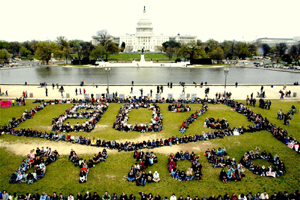
From November 2 to November 5, young from all over the country will gather in Washington, D.C. for Power Shift, "the first national youth summit to solve the climate crisis." The conference will be held at the University of Maryland in College Park, Maryland. Included in the agenda are workshops, panels, performances, a green job fair, and a lobby and rally day on Capitol Hill. At the summit, youth will meet in groups based on geography, building networks and learning how to carry home the lessons learned and begin action. On November 3, the conference will coordinate with a national Step It Up day, an opportunity for individuals across the country to organize actions that suit their communities, like clean-ups. You can sign up for Step It Up online and send in pictures after the event to be compiled and sent to Congress. Registration for Power Shift can be found on the website. Registration ends on October 31. As of this writing, 4,701 youth leaders are registered. It will be an opportunity for youth to share their vision of a future--and a present--of vitality, progress, and innovation. Joining voices, youth will unify and share their message of a healthy future that only a clean planet can provide.

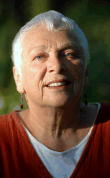
New Moon recently caught up with twenty-year-old Shadia Wood, one of Power Shift's spokespeople and organizers. She began her activism early, and it has continued as a passion throughout her life so far. Her position just shifted from youngest Campus Climate Challenge Coordinator for the Energy Action Coalition (the organizers of Power Shift) to working for Power Shift directly on travel scholarships for youth of color and low-income youth. Here are some highlights from our interview. Stay tuned for a later post to read more of the interview and learn more about Shadia (like the first press conference she attended at two)!

New Moon: How long has [Power Shift] been in the making?

ShadiaShadia Wood: That’s such an interesting question… When we created our three-year campaign plan for the Campus Climate Challenge, which is the Energy Action Coalition’s main campaign, we always knew that we were going to be putting on a national conference at some point. We thought it was going to be the third year. We realized that [at] the rate we were going in year one, we were going to hit a lot of our goals and surpass them by so much. Because the movement and the issue is so on right now, and it’s very apparent, like California is on fire right now. There are so many glaring instances of global warming that across the country we were just hitting our goals and surpassing a lot of them. So we decided that it was actually year two that we needed to have a national convergence on global warming. We kind of figured that out last January. The actual planning—I don’t recommend this for anyone who does want to put on a conference of five thousand young people—took place in about four months… about four or five months. That is a headache and it causes a lot of heartache and it causes a lot of miscommunication, so I don’t recommend that at all, but it is coming together, and it does feel really, really good and exciting. It feels amazing that this is finally happening, and I can’t believe we’re a week away from the conference [at the time of the interview]. Make sure you plan your conferences well in advance.

The Power Shift's official three goals are to make the U.S. presidential candidates and Congress take global warming seriously, to empower a diverse network of leaders, and to achieve broad geographic diversity. What single political action do you personally think would the most difference for the environment right now?

That’s a really good question. The Energy Action Coalition as a whole is pushing the 1Sky Initiative…It’s not a policy, but it’s a policy ask. It’s probably the boldest thing we have out around global warming…Basically what the 1Sky does is it’s teaming up with a bunch of different organizations and coalitions to make sure that we’re asking for the right priorities to be taken. One of those things things, which is the biggest priority, is to mobilize America for solutions, and that creates five million new jobs. They’re trying to launch a green jobs corps. So basically it’s, “How are we helping people who have these industry jobs who aren’t making a lot of money but who are living off of these industry jobs and they’re providing for their family and that’s what they have?” So it’s, “How are we jumping the gun so we’re not in a situation where these people who are low-income are behind and they’re not trained in these new green jobs that are emerging? How do we capitalize on that and make sure that we’re making a safe space for these workers?”

Another [priority] is to secure our future. That is around the emissions reductions, cutting at least eighty percent of below-1990 levels by 2050. That also has benchmark goals, because you can’t just say, “By 2050 you probably should cut around eighty percent.”

And then we have transform our energy priorities, which is reprogramming fossil fuel and highway investments for clean energy choices, so starting with a firm moratorium on coal plants. That is something that the Energy Action Coalition was pushing heavily for—no new coal in general and no coal in general. So it’s pushing for these bold asks.

So that’s our place at the table, Energy Action and youth, is making sure that these policies that are emerging are bold and are asking for things aren’t what’s happening with these other policies like Lieberman and Warner. Making sure that these policies are actually going to be impacting everyone positively, especially low-income and people of color.

What do you think the highlights [of Power Shift] are going to be? What are you most looking forward to?

There are a couple different ones. The more informal ones are how it starts out—everyone’s going to these workshops, and they’re getting all excited, and they’re loading their brains up with all this knowledge, and they’re kind of overwhelmed and psyched at the same time, getting really inspired. And it’s the conversations afterwards, like when you’re going home at night and your brain is swarming, and you’re like, “Oh my God what do we do?” and you have a bunch of youth with you already—you have [about] forty youth leaders maybe in your group—and you sit down and you’re talking. And you are creating state networks, and it’s these initial conversations where things get started, which is so inspiring to me. Energy Action was created after a regional summit in the southeast on someone’s dorm bed, the idea of creating a coalition like Energy Action. So it’s those types of conversations that are really inspiring to me. Those are the highlights, those are the behind-the-scenes things.

Then also there’s also the lobby day and the DC rally, which is going to be really, really exciting. We’ll be on the capital, have a few speakers, and then we’re also going to be hitting up our representatives and pushing for these bold asks. That’s always really exciting to me, especially because I did a lobby campaign for eight years. It’s good to see people out in the streets and doing that.

What is the next step after Power Shift?

The next step is to go back to your homes and your communities, and take it there. It’s taking those skills and inspiration back to your community. Taking those networks that you built and creating something that can have a local impact. You can share those stories.

Thanks, Shadia! As I said, stay tuned for more of our interview. In the meantime, here are some more links to check out:

http://youtube.com/watch?v=BuXXqEmPfWA
http://climatechallenge.org

Girls, your voices make a difference, and it's all about what you have to say. What's your passion?

Signing off, Bissy (Elizabeth!)

Sunday, October 21, 2007

Girl's Best Friend


It takes guts to be a girl in this world. There is no denying it. It is an exciting and fruitful position to have, but it takes a certain amount of courage. There are media images to combat, stereotypes to face, and the ongoing processes of connecting to and holding onto the true voice within herself. Every girl is brave.

One brave girl who has shown up in the news lately is twelve-year-old Shea Megale. Together with her five-year-old companion dog Mercer, she is trying to get the news out about Spinal Muscular Atrophy, a condition that has resulted in her use of a wheelchair to get around. Mercer, Shea, and her mother recently did a television interview to promote Shea's new book, Marvelous Mercer. Shea is remarkably well-spoken, showing the world just what girls have in store for it in terms of an ability to make a difference. "I want to do things to change the world. I think kids like us can," Shea says on the Marvelous Mercer website. She sounds like a New Moon girl!

Marvelous Mercer tells the imagined story of Mercer's nighttime adventures, taking part in the physical activities like ice skating that Shea herself cannot because of her SMA. One point that Shea's mother makes in the interview is that the Marvelous Mercer books (the book is planned to turn into a series) help take the focus off of Shea by focusing people's attention on her dog. It takes bravery to attract the amount of attention that Shea does just by going to the store, and it takes even more to channel her experience constructively by writing. Her "disability" is transformed into a heightened ability to imagine.

This leads me to my questions for you readers. If you had been inventing the English language, what would you have called the word "disability" instead? To me, it's always seemed like it shouldn't have anything that suggests a negative the way the prefix "dis-" so wrongly does. Do any of the alternate terms out there? Or does something like "unexpectedly gifted" ring more of a bell in your heart? I want to know.

What about companion animals? There are all kinds--seeing eye dogs, hearing ear dogs, the list goes on... Do you or someone you know have a special companion animal who makes a difference? In the television interview, Shea pointed out that of all the miraculous things Mercer can do for her, like turning on the lights and opening doors, the most valuable of all is being her best friend.

Bravery has many forms, and this evening I want to celebrate all of you brave girls out there.

Adios for now, Elizabeth

Friday, September 21, 2007

Tales of a Female Nomad

If you are anything like me, you have an intense passion for traveling and, if it were at all possible, would do so for the rest of your life. Rita Golden Gelman is doing just that. In her memoir, "Tales of a Female Nomad: Living at Large in the World", Rita journals her fantastic journey across the world. From Mexico to New Zealand, she conquers the world...all by herself!
After a divorce, Rita finally sees an opportunity to do what she's always wanted to do, travel the world. Shying away from the tourist spots Rita makes it a point to live and experience the day-to-day lives of the natives, a wise choice that only made her journey more valuable. She states in an interview, “I like to stay in one place long enough to become a part of a community.” This is an important piece of advice for all travelers. Rita believes there is strong distinction between being a tourist and being a traveler...Rita, of course, being the latter of the two.
While reading this fantastic story the idea that women should avoid traveling alone began to diminish. If Rita can do it, why can’t we all?! Of course, being safe and listening to your conscience are the most important things to keep in mind when traveling. I have had the opportunity to travel a great deal, primarily in groups, but I have found that the most unforgettable experiences were being able to go off and explore on my own. The ability to choose my own path and see what I want to see is one of the most empowering feelings. Rita’s strength to grab life by the horns is extremely inspirational. In an interview, she claims she has no idea where she’ll be in a year from now, there are not many people who can say that.
At 64, Rita has no intention of ending her travels anytime soon. From her years of roaming the earth Rita has learned that “There is joy in opening up to the world and in reaffirming the oneness of humanity. And age frees us from many daily responsibilities; we have no excuses to put off pursuing our dreams.”


Friday, August 17, 2007

Go Wild!

Do you love animals? Do you dream of working with animals? A zookeeper gets to work with all kinds of animals everyday. They're the ones who work behind the scenes at zoos, making sure the animals are content and active. Recently, New Moon sat down with Wendy Buczynski; a zookeeper from the Lake Superior Zoo.

New Moon: How long have you been a zookeeper?
Wendy Buczynski: 20 years.

Is that something you’ve always wanted to do?
Actually, no. I was going to be the world’s best veterinarian. I got a little sidetracked.

Growing up did you ever think of 'zookeeper' as a career?
No because I was going to be a vet! I want to be one since I was five.

How did that work out? Did you start off by going to school to be a veterinarian?
No. My path was clear until 11th grade. All of the sudden the thought of 8 more years of school passed senior. I just couldn’t stomach it. So I went for a 2 year associate degree in veterinary technology.

Can you go to any school for that degree or is that a special school?
It was a special school. The University of Minnesota at Waseca. A college which has since been closed down.

Are there special classes you have to take to get an associate degree in veterinary technology?
Yeah, you have to take the college biology, college chemistry, college math, all that. All that interesting stuff and then you have your practicals. Where you actually work with the animals and draw blood and take x-rays. Back in those days they didn’t let us do too much. Fill out records, file correctly.

So did you get a mentor or was it all just in-the-class learning?
No. I was working as a vet technician and you can’t live on what a vet tech makes. My husband at the time got laid off and so I had to get another job. So I got a job at the Duluth Clinic. Eventually, the clinic kept offering more hours and the vet clinic was taking more and more hours away so I just shuffled over to the clinic. And I worked there until one day my neighbor saw an ad that they were running the zookeeper test in the paper and he said ‘you should apply for this because you really like animals’. And I got the job.

Can you describe a typical day as a zookeeper? Do you all have the same job or do you come in and get assigned different jobs?
At this particular zoo you come in and your assigned to work in a certain area. And then you take care of the animals in that area. And depending on what animals there are that depends on what you have to do.

Do you have to know about every animal because you don’t know where you’re going to go?
Well, I do because I work at all the rotations. So some of us work at every single area but some only work at specific areas. And when you’re a ‘floater’ and work everywhere you’re not expected to do anything extra like enrichment; you’re expected to take care of the animals and make sure everything is done. Although if they want to do the ‘extra’ work they sure can; they’re just not required to. They do clean but if there is a problem like a pump doesn’t work they aren’t expected to fix it. They can leave it and wait for me to come back.
9. Okay, are “floaters” considered zookeepers even though they don’t have the same responsibilities as you?
Oh, yeah.

What’s the difference between you and the “floaters” then?
Well, we’re a Union so seniority rules. So the highest senior gets to pick where they want to work. And some people chose to ‘float’ because they liked the variety of working in different areas.

How about coworkers? Do you have to work with each other a lot or is it a more independent job?
Well, we work with the public a lot. Right now we are stretched really thin; we’re at minimum staff. Right now I’m training in a new zookeeper. She’ll be here for 6 months of training then she can start. It’ll be nice; we’ll get some relief.

What’s a typical work schedule? Do you have to work weekends?
My days off are on Thursday and Friday; I have to work on weekends.

How long are the hours?
Only 8am to 5pm.

Does everyone rotate so there’s always someone here to take care of the animals?
There’s always someone here. Again it’s the seniority thing. By the time they got down to me there wasn’t any weekends open.

Is there a certain schedule you have to follow during the day; like feeding at specific times?
No, it’s all pretty much common sense. You do things that need to be done. We do have a rule that there needs to be two zookeepers to work with the ‘dangerous’ animals. That’s for safety reasons.

And what are the ‘dangerous’ animals?
In my area it would be the tigers. There also the leopards, cougars, brown bears, polar bears and the lion. So when we have to go in the work we have to schedule a time with our partners, mine is a zookeeper who works in the area next to mine, to take care of those animals together.

Since you see these animals every day you get to know their behavior. What happens when something isn’t right?
In the case of a big animal I would take it off exhibit.

And how would you get the animal off exhibit?
They’re pretty well trained, thankfully. It has taken years for that to happen. Otherwise you could use food to lure them in. They’re just used to the routine. So then you’d call in the vet to look at them if it was bad enough.

What happens when an animals dies at the zoo?
When we were accredited every animal that died would have to be sent down to the state lab to have a necropsy. Now that we’re no longer accredited it’s up to the vet to decide if the animal needs to go down for an official necropsy or she can handle it here.

What is a necropsy?
That’s just the animal term for autopsy.

Being a zookeeper, what are the pros and cons?
Oh, it’s just the best job in the world. It is always simulating and it is never boring. It’s an active job, but it’s not really grueling.

So you don’t fall into a routine where you just trying to get things done.
Well, you try to have a routine so things do get done. But things are always varied and working with animals is great.
Is part of your job to educate the public?
No, not really. We have such a good education department here and that’s their job. But because of where I am working right now, I frequently have to interact with the public. All of us are required to interact with the public if the occasion arises.

Is there a special uniform that zookeepers have to wear to work?
It really varies from zoo to zoo. Mostly, though, we wear khakis and a zoo shirt. Bigger zoos will usually pay for uniforms.

Do you think this job has any difficulties for women?
No. I have never experienced anything like that. The only real problem I have is being short. It seems like everything is set up for a tall person.

So, do you have any advice for girls who want to be zookeepers?
It’s a tough field to get into because there are not many job openings, the pay is low, the hours are long, the schedule usually…sinks so you have to really like what you’re doing. But if you can get the chance to volunteer at a zoo or get into an internship (which is usually unpaid) when you can actually see what zookeepers do and experience it. If you decide to pursue it, know that more and more zoos, especially the accredited ones, require that bachelor’s degree or even a master’s degree in some kind of science. And if you want to climb the ladder in the zoo world you have to be ready to move. So you can be a zookeeper and get a lot of experience and then you’d apply to be a lead keeper somewhere. After that you could become a curator and then, the highest, the director of a zoo. They do fundraising and handle most of the business.

Is that a recommendation?
They (girls) have to absolutely love animals; they have to love everything about animals. But if they enjoy it; go for it.

What if they don’t like poop?
Then being a zookeeper is not for you. You have to love everything about it. And you have to love all animal; you can’t say ‘I want to be a zookeeper because I really love animals, but I don’t like spiders. Well, spiders are animals and you might have to take care of one.

When you first become a zookeeper do you have to research all the animals the zoo has?
It’s not a requirement, but it’s a really good idea. Also you don’t really look at what’s affecting the species as a whole; you just focus in on the animal at the zoo and look at their needs.

Is there ever a day when you just think to yourself ‘why did I choose this’?
Payday. Christmas morning when you’re getting up at 6am to go to work because it didn’t land on your day off.

You don’t get holidays off?
If it falls on your day off you get the day off. If it’s your day to work, you get to go to work. Unless you use vacation time.

What happens when there’s an emergency or bad weather and no one can come to work?
We have never had a time when no one could come in. There’s always been at least two people at the zoo. But if something did happen and no one could get in, the animals would be fine. They are all very well fed and they’d be okay for a day. I wouldn’t want to leave them for two days but for one they’d be fine.

What happens when you get a new animal that the zoo has never had before? Is there a training program to learn how to take care of it?
There isn’t a training program. Whatever area that animal would be ultimately going to they, of course, would research the heck out of it. And the person who is in charge of Animal Care would get all the paperwork from wherever that animal came from. So everyone would learn a lot from that and there would be calls back-and-forth from the place the animal came from.

Is there a lot of exchanges of animals between zoos?
It depends on if the zoo is accredited with the Association of Zoos and Aquariums. But yeah there are mating programs and transfers. Zoos hardly ever purchase animal when they’re accredited because you have animals that belong to other zoos. You just house them. There are breeding loans, there’s hardly any buying and selling going on.

As zookeepers do you get to travel around and research animals?
One zookeeper right now is in Panama for two months. Her favorite species is bats; so she’s studying bats down in Panama . But she had to use up all of her vacation and all of her sick leave and took some days unpaid.

Do animals at the zoo have a different diet than wild animals?
Yes they do. We have to alter their diet but there is a commercial diet made by Purina and other companies. They make a chow for virtually every animal you can think of. We use that for most of the animals, but not all of them. Animals will also get fresh fruit. Some have to adapt to the fruits and vegetables that grow up here but you can also supplement their diets.

Even cockroaches?
*laughs* No.

What do you enjoy doing the most at the zoo?
My favorite part is the nutrition and I also enjoy enrichment. I like looking into the different diets and the different toys. I like see my animals happy.

Why do you think zoos are important?
Wow, that thought has really changed in the 20 years since I’ve been here. Then I started they were almost just an entertainment feature for people to come with their families. Zoos are very popular and they’ve always outsold sporting events and such. Then, through the years it kind of became a way to preserve animals. All these different animals were dieing off because of habitat loss, poaching, etc. So they started these breeding programs for exotics and they thought ‘we’re going to repopulate the world’. Well, that didn’t work because the breeding programs were successful but often the reintroduction programs were not. Animals still had the same problems once they were put back in the wild; poaching, hunting, habitat loss. Now, I would have to say, the zoos’ main mission is to provide an experience where adults and kids can actually see these animals from places they might never travel to. Experience what they look like and sound like; unlike the T.V. which is so sterile. Also we have the conservation and education messages we try to get out.

Some people say that zoos are cruel to animals; what do you say to them?
You can’t control those people. But the USDA, which is a federal organization, only has mandates over mammals; they don’t have anything over birds, they don’t have anything for insects. But their rules for mammals get more evolved every year. No matter what the organization, they have to come to snuff with these rules or they’ll lose their license. If you lose your license you’re going to be shut down. So the USDA is now demanding that zoos have enrichment and enclosures stay a certain size with a certain amount of animals.

Is a license different than accreditation?
Oh, yeah. Every zoo, pet store, anything that has to do with animals has to have a license. Zoos can be accredited.

Do zoos have fundraising for environment groups and other zoos?
We have a zookeeper in Madagascar we support. Basically, we pay his wages because his country can’t afford to.

Alright, since you love animals so much, do you have any pets?
I kind of down sized. Right now I only have my two dogs, two turtles and a lizard.

Do you have a favorite animal at the zoo?
My favorite animal is Nemo the lion. I hadn’t been here too long, maybe a year or so, when he came. I’ve taken care of him all his life. He’s my buddy.

Finally is there anything you want to say to girls in general; about life or growing up?
Stay in school and keeping reading everything you can get your hands on. Also pay attention to the maths and sciences because we really need some great minds to enter those fields. And if any of you out there are interested in politics, we need some great minds there too!

So if any of you girls out there are interested in being a zookeeper at all, just check out you local zoo's site. Most zoos will have programs to get youth involved and learning about what a zookeeper does.
Peace, friends.

Thursday, July 19, 2007

Take ACTION!


Hey all you girls who like to make a difference! I found some really great websites that can help you take action and learn about global issues. First, there's a website from the Peace Corps geared towards kids. There are some great features that explain what the Peace Corp is, what making a difference means, food and fun in other countries and stories of kids who took action. I enjoyed clicking on various countries and learning how to greet people in different languages. The site provided a unique insight to how volunteers prepare for their trips and the places they go. The only down side to this site is that there aren't a lot of suggestions on how you can take action. Also, only countries where the Peace Corp is involved are highlighted. For a more in depth look, I suggest going to the regular Peace Corp site.
If your interested in human rights go to the Amnesty International website. This is a great organization that does a lot for people around the world. If you don't already have an Amnesty International program at your school, I highly recommend that you start one. You can find help on the website and find resources already in your community. There is something that everyone can do.
Once you join/start that Amnesty International program *wink, wink* you can partner up with Save Darfur to fundraise for their fall campaign; Dollars for Darfur. (It was started by two high school student who wanted to make a difference; Nick Anderson & Ana Slavin. They've earned over $200,000 dollars for Darfur!) I know a lot of you care deeply about the genocide in Darfur and this is a great way to get your high school or group involved. (Don't be fooled when the website says the contest stopped on April 30th. That was their first fundraiser campaign and, because it went so well, they plan to do another one in the fall. Just sign up and you'll get emails informing you of all the dates.)
Another great site to look at is the United Nations. There isn't a lot of "take action" links, but the website has so much useful information. Like the Amnesty International site, you can look at numerous global issues and topics. This is a site packed with information, but don't get overwhelmed. I suggest following the links at the top of the page in yellow. (Peace and Security, Economic and Social Development, Human Rights, Humanitarian Affairs, and International Law.)
Lastly, check out Day of Silence's website. This is a one day event that your school can participate in that occurs in early April. There are a lot of ideas on the website that can make the event a great success (like making T-shirts or having a "Breaking the Silence" party afterwards). Talk to your administrators about starting the Day of Silence at your school.

Do you know any websites that help you take positive action? Send them in so other girls can make a difference too!
Peace, friends.