Monday, September 10, 2007

Ever Been the NuGrl?

If there's one thing I love, it's blogs. I love how they give you peeks into people's lives and personalities. I love that you can use them to chronicle the year you got your first horse or all the books you've read about broccoli. I love that they can be a locked, private haven, or a place where the world listens as your ideas take center stage. And I love the New Moon blog because it gives us lots to talk about between issues of the magazine.

Our friend, Cheryl Dellasega, creator of Club and Camp Ophelia, has created the bloggrls series -- novels about girls told in a blog format. One of the coolest things about the first bloggrl books is that a teen girl created all the illustrations. And guess what? Cheryl's publisher is looking for another teen to illustrate upcoming books. Read on to hear it straight from Cheryl.

"If you've ever been new to school, known someone who was new, or face being new in the future, check out the story of Sadie, aka nugrl90, whose life gets turned upside down when her parents split and her mom moves her to a different school district. In ninth grade, the school nurse gave Sadie a diary and suggested she write about her feelings (as if!); instead, she decides to create a blog that chronicles her year as a new girl.

Tenth grade turns out to be a year full of challenges. Sadie has to make a tough decision about the boy she loves and learns her best friend has betrayed her. Meanwhile, at home, her WS (wicked sister) finds endless ways to torment her, but at least her beloved dog, Homer, can always be counted on to provide comfort.

In addition to a "Clicktionary" of blogspeak (send me your favorite saying and I'll send you a t-shirt and cyberframe), the book has illustrations by Karina Lapierre, a teen girl who read the story and got a contract with Marshall Cavendish to provide drawings. Want to be the next girl artist who gets paid to illustrate the next book and has her name on the cover? Go to
www.bloggrls.com and find out how. Or, if you're a writer and would like a chance to win an iPod, enter the Bloggrl Writing Contest--more info is also available at www.bloggrls.com"

I know there are some talented artists and writers out there -- I hope you will try your hand at some of the contests! I'd also be happy just to hear your thoughts -- do you keep a blog? Do you think blogs can work the same way as a diary? Have you ever written something in your blog and wished you hadn't? Have you ever found unexpected friends through blogging? Tell us all about it!

Sunday, September 09, 2007

For the Love of the Sport?

This morning, I elbowed my way through throngs of spectators, huddled in the early-morning hours to observe one of the zaniest, most phenomenal events my hometown of Madison, Wisconsin ever witnesses: the annual IRONMAN triathlon.

For the uninitiated, the triathlon is the glory of all endurance athletics. It is a competition in which mostly-buff athletes swim their guts out, run out of the water, strip out of their wetsuits and throw bike gear on their still-wet bodies, jump on a bike, attack miles of hills and other geographic formations that discourage biking, and finally abandon their bikes for the final leg of the triathlon: the run.

Full disclosure: I am a triathlete myself, and it is one of the loves of my life. I don't know if there is any sport more thrilling, exuberant, or mind-boggling. Racing is an incredible adrenaline rush.

But I am not an Ironman. Or an Ironwoman. I race at the sprint- and Olympic-distance lengths, which usually include something like a 1/2 mile swim, 13 mile bike, and 3 mile run (sprint distance) or 1 mile swim, 25 mile bike, and 6 mile run (Olympic).

The Ironman, on the other hand, is a race of a 2.4 mile swim, a 112 mile bike, and a full marathon-length run (over 26 miles). It's a killer.

I loved watching the Ironman athletes as they raced out of the water, stripping out of wetsuits as they padded past the cheering throngs. I felt sorry for the athletes more than anything else: here they had just finished a grueling 2.4 miles of swimming through waters so crowded they resemble a literal sharkfest, and yet they were just beginning the day. (The fastest finishers complete the race in about 8 hours; many barely make the midnight cutoff.)

For all the enthusiasm in the crowd, the competitors didn't look particularly happy. As a triathlete, that really bothered me--when I race, I don't think I ever stop smiling. I guess the adrenaline had already worn off their faces (or maybe it was the embarrassment of waddling past thousands of people half-naked).

But why, I wondered, do people practically kill themselves to finish an almost-impossible race? Why do they devote a year's worth of training for a single day, which will not be experienced with utter joy but mainly fatigue and discomfort?

I know that many elite sports are hard to understand until you've experienced them, and I admire the Ironmen (and Ironwomen) who come from all parts of the world to brave the unknown, to challenge inner resolves they barely knew existed. But why?

What do you think...

When it comes to sports, how much is too much? Would you sacrifice hundreds of hours of your life to achieve something as superhuman as an Ironman finish? If people devote themselves to athletics because that's one of their passions, is their life fulfilling, or crazily unbalanced?

Would you be up to the Ironman challenge?

Saturday, September 08, 2007

Burma, Laura Bush, and Why It Doesn't Hurt to Be a Dreamer

Laura Bush: First Lady. Librarian. Education advocate. And now...radical activist?

I was shocked last week to read that the First Lady, in a highly unusual move, decided to use her voice to intervene on behalf of a populist freedom movement in Burma.

Some background: Burma, also known as Myanmar, is a Southeast Asian nation controlled by the iron rule of one of the fiercest military dictatorships in the world. The country been struggling for fifteen years to free its people from the junta. Aung San Suu Kyi (photo below), now held under house arrest in Burma's capital city, has led the fight for freedom. She's a terrifically courageous woman--probably the bravest woman I've ever heard of--and received the Nobel Peace Prize for her incredible strength.

This August saw the biggest peaceful pro-democracy protests in Burma in ten years. Around the world, activists have been joining the Burmese people in solidarity. Groups like the US Campaign for Burma have brought together everyone from Hollywood actors to U.S. Representatives in calling for freedom in Burma. Even President Bush issued a statement condemning the Burmese government for arresting protesters.

And last week, the First Lady made an extraordinary move: she telephoned the United Nations Secretary General, Ban Ki-Moon, and called on him to denounce the Burmese government.

This is the first time the First Lady has taken a stand on international issues--until now, she's concentrated her efforts on national issues that avoid controversy, like literacy, education, and healthcare.

But this May, she joined the 16 women in the Senate to appeal publicly for Mrs. Aung San Suu Kyi’s release. In June, she met in the White House with refugees and exiles from Burma and wrote an op-ed piece in the Wall Street Journal on behalf of Mrs. Aun San Suu Kyi. And now she's called for the United Nations to draft a resolution on the human rights abuses in Burma.

She told TIME, "Like many people, especially women, I got interested because of Aung San Suu Kyi, and I learned about Burma and how she represents the hopes of the people of Burma, and how those hopes were being dashed by her house arrest and the fact that her party won the elections and never had the opportunity to have power at all...One of the things that's really important for the world to know is that the people of Burma do listen to radio, and when they hear that people around the world are speaking out for their rights, I think it gives them hope."

Mrs. Bush, 60, also responded to comments that her new role is a little unusual, saying: “I think this is sort of one of those myths: that I was baking cookies and then they fell off the cookie sheet and I called Ban Ki-moon."

I know that many of us don't count ourselves as supporters of the Bush administration. But I'm thrilled to see a woman who is willing to speak out for justice, to bring light to a cause that our country has all but forgotten. It's true that the First Lady is a politician, and her motives aren't necessarily genuine idealism. But her actions are a great reminder of the power of idealism.

Maybe her words won't make a difference. But she argues otherwise: “So ‘why bother,’ I guess, is the question people ask. But I think the answer is, ‘Why not?’ I mean, why not continue to put pressure on the regime in any way we can?”

The First Lady is a great reminder that it never hurts to try. We have nothing to lose from taking a stand for what we believe in, even if our goals might seem impossible. In fact, idealism is the only way that we've ever made progress. After all, weren't most great leaders once dismissed as dreamers? As the feminist Emma Goldman once declared, "Idealists...foolish enough to throw caution to the winds...have advanced mankind and have enriched the world.”

Today, I was lucky enough to attend Fighting Bob Fest, the biggest political event in the Midwest. Thousands of activists converge to talk politics, meet some big-time leaders, share ideas, and just have fun. One of the speakers I heard was peace activist Cindy Sheehan, who is as much a hero of idealism than anyone else. Her words stuck with me. She said:

People don't want change. They want the status quo. Why do we want the status quo? The status quo tolerates racism and sexism and homophobia...Our job is to tear down, not protect, the status quo.

No matter who we are--First Lady or first grade student--it doesn't hurt to be a dreamer. Think big. To quote Gandhi (sorry, getting a little quote-heavy now): "We must become the change we want to see in the world."

And to all those who complain that I am prone to blog posts decrying terrible things in the world, yet never leaving suggestions of ways to take action against these injustices, I leave you with a website: DoSomething.org. Do Something is a one-stop-shopping resource for girls out there looking for ways to make a difference. They'll hook you up with volunteer opportunities, activism groups, mentors, girls working on the same issues you are, and lots more resources... Best of all, they have a handy section called "Do Something Today," where they feature one little thing you can do to make the world a better place. Because little things make a difference.

And that's your daily dose of idealism, folks. Peace.

A disclaimer: Certain bloggers (ahem, Natalia) are prone to writing about politics and activism. Because that is what they feel passionate about. And we at New Moon like to share our passions. But the views of any New Moon blogger--whether New Moon staffer, guest blogger, or girl writer--do not necessarily reflect any views of New Moon Publishing. And, for the record, New Moon never endorses political candidates. We just endorse the power of girls' voices. So tell us what you think...and we'll do our best to help make your voice heard! Love, LunaOnline (that's Luna's twin sister, who spends more time wired than she should...)

Friday, September 07, 2007

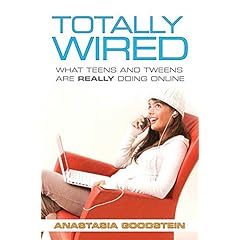
Are You Totally Wired?

Hey, all. If you're reading this, chances are you like to spend time online. And it's probably no surprise to you that teens and tweens your age are the most tech-savvy generation ever, or that girls spend more time on social networking sites, like MySpace and Livejournal, than boys. Our good friend Anastasia Goodstein is an expert on teens and the internet. She's recently published a book, Totally Wired, that tracks what tweens and teens are doing online. Although the book is geared toward helping parents understand the online world of their children, it still contains a lot of neat information and websites for girls. AND now Anastasia is touring to talk about teens and technology. Check out her tour dates below -- or see if you're interested in bringing her to YOUR area.

Here's a rough schedule of Anastasia's tour:

October 3-12 New England

October 15-19 Tennessee

October 22-26 DC/Virginia/Maryland

October 29 - November 10 California

Between November 12-16, Anastasia can speak in any part of the country. For more information about Anastasia and her Fall tour, click here.

But now, let's talk about you. Are you "totally wired"? How much time do you spend online? How do you feel about girls your age spending more time online than any other age group? What are the benefits and pitfalls of being "Totally Wired"? When you go online, what do you do? Do you think tweens and teens spend too much time online? Please comment and share all your internetty thoughts!

Thursday, September 06, 2007

Why Aren't More Women Blogging? (Actually, You Might be Surprised by How Many Are)


Last month, Jennifer Pozner wrote a great article about women and blogging--I've been meaning to share it for a long time!

Jennifer is the Founder & Executive Director of WIMN, or Women in Media and News. WIMN is an incredible, dynamic organization working to change the face of women in the media--how women are represented and portrayed--and the face of media for women--the role the media plays in womens' lives. More importantly, WIMN works to make the voices of often unheard women heard, including women of color, low-income women, lesbians, youth and older women.

And WIMN has an awesome blog, called WIMN's Voices: A Group Blog on Women, Media, AND… (you fill in the blank--women bloggers discuss everything from hip hop to human rights, to science and sports). Over 50 women contribute to the blog, creating one of the most diverse and wide-reaching blogs online (they range in ange from 19 to 64, they are everything from Quaker to Muslim, they include GLBT women and their straight allies, and about 45% are women of color).

So, I highly encourage you to read their blog. But back to Jennifer's article:
Half of all bloggers are women. Bet you didn't know that. Maybe that's why, as Jennifer points out, many journalists choose to keep asking the same old question, "Where are the women bloggers?" -- rather than actually seek them out. And there are many of them! Take BlogHer, for example: it's an online community of more than 13,000 blogging women. But when BlogHer held an annual convention in July, attended by some 800 bloggers ranging from artists to activists, grandmothers to geeks, the amazing event didn't receive a single bit of national press coverage.

As Jennifer writes, "If many believe that blogging is a primarily male sport, it is partially because old-school gender disparities in resource allocation, power and popularity long entrenched in traditional news media are replicating themselves online. In the blogosphere, young men - mostly white and mostly economically comfortable - link to, write about, promote and fund their buddies' blogs; and corporate media play star-makers, quoting, profiling and featuring the punditry of this New Boys Network. As is hardly surprising to those of us who monitor media representations of women, women who blog (especially those who write about feminist issues) are off the radar."

In other words, blogging--an amazing way for thousands to self-publish and freely distribute their thoughts through the information highway--remains an old boys' club. Women's blogs are less likely to be read. Period.

So, readers, keep reading and supporting your favorite girl- and women-written blogs! (Shameless self-promotion, I know.) But it's up to us to keep looking for ways that women and girls can use blogging to make our voices heard. The tools are there. We've gotta use 'em.
Leave us a comment and join the discussion: Do you blog? Read blogs often? Which are your favorite (or least favorite) blogs? Which issues do you think blogs cover too much, and which do you wish were covered more?

Wednesday, September 05, 2007

Because It's What Every Girl Needs

Earlier today, Feminsting and Jezebel reported on the newest, the latest, the greatest in high-tech fashion...scented panties. What every girl needs, right?

Why does the fashion industry keep bombarding us with messages that we're just not 'good enough'? Whether they're telling us that we're not thin enough to fit a fashion model's size, or that our normal body parts' normal smells are so gross they need to be smothered by strange chemicals, we get the message: we can't be proud of who we (and our bodies) are.

Apparently, these new panties create their scent by utilizing a technology that weaves what is basically a drier sheet into the underwear's own fabric. Which sounds awfully unhealthy--like wearing a sheet of chemicals next to your skin--if not just plain gross. As Jezebel wrote, "Three little letters come to mind: UTI [Urinary Tract Infection]."

Aren't there better things that the technology world could be doing to further our fashion choices? Perhaps designers could find a way to weave little speakers into our clothing that project little messages to us throughout our day. Like "you're beautiful the way you are."

But given what we know about the fashion industry, that's unlikely. After all, why would these panties sell (and by the way, they're already sold out) if the fashion industry and the rest of society weren't already telling us that there's something wrong with just being...ourselves?

I'll leave you with the comment of one woman, who read Feministing's post: "As society has it, most women are already shy about their vagina as is. Do we really want to go forward with making a vagina into something it's not really supposed to be? Part of consciousness-raising is making women realize that the vagina isn't something to be ashamed of. This product is just doing the exact opposite."

Couldn't have said it better myself.

Tuesday, September 04, 2007

Make Some Noise!

Hey, girls! Here's a way cool opportunity for older teens (high school-aged) from YouthNoise, an organization affiliated with UNICEF.


YouthNoise is hosting a series of youth summits across the country this year that will provide teen leaders an opportunity to create change in their local and global communities.

What is a YouthNoise Summit? A YN Summit is a conference and cultural event for students. These FREE two-day events are about creating grassroots change in local neighborhoods. What would you change about your world? Come to a YouthNoise Summit to give your two cents, find out what others are doing, and get involved.

Who's invited? High school and college students who are passionate about finding REAL solutions to local problems.

When and where are the YN Summits?

San Francisco, CA- September 1-2, 2007

San Jose, CA-September 22-23, 2007

Minneapolis, MN-October 13-14, 2007

Orlando, FL-November 17-18, 2007

Oakland, CA-January 12-13, 2008

Tucson, AZ-January 26-27, 2008

Los Angeles, CA-February 9-10, 2008

San Diego, CA-February 23-24, 2008

Bakersfield, CA-March 8-9, 2008

Denver, CO-March 29-30, 2008

Providence, RI-April 12-13, 2008

Sacramento, CA-May 3-4, 2008

Seattle, WA-August 30-31, 2008


Why should I go? Create projects to benefit your community and get online and offline support to help you plan, develop, promote, fund, and execute grassroots civic action. As a UNICEF volunteer, you can tell others about UNICEF's work and create projects that will result in helping UNICEF save children's lives.

How do I sign up? Register online at http://www.youthnoise.com/summit.

What's happening at the Cultural Event? Local youth artists and musicians will showcase their talents at an all-ages youth organized cultural event with headliner bands, spoken word, youth art and more.

What is I'm not in high school yet? Check out the Youth Noise website! It's a youth-driven, non-profit website dedicated to providing creative ways for youth to spark movements and magnify their voices. The website is great! It's got resources for taking action on a variety of causes--from poverty to war to education, as well as a database of projects created by youth, discussion forums, info on elections, and much more. They even have communities dedicated to "empowering women," "giving girls a voice," and feminism. It's an entire community dedicated to youth taking action! Kudos to YouthNoise for their awesome work.

Monday, September 03, 2007

Labor Day Blogging

Happy Labor Day, readers! Before heading off to obligatory family picnics, take a few minutes to learn about why we have Labor Day--and why it's still so important to keep fighting for workers' rights!

Labor Day began 125 years ago, during a time when workers across America were involved in a surge of protest movements that demanded their rights to fair working conditions and pay. They wanted an end to 12-hour work days, paltry wages, and unsanitary and unhealthy working conditions. They wanted to unionize, or join together in workers' unions that would counteract greedy, powerful big businesses.

Mary Harris Jones, aka Mother Jones (the namesake of the modern magazine), was an important figure in the labor movement. Mother Jones, a self-described "hell-raiser," was once denounced in the U.S. Senate as the "grandmother of all agitators." But she was proud of that title and said she hoped to live to be the "great-grandmother of agitators."

Mother Jones was one of the most important members of the Knights of Labor, a major workers' union that helped establish Labor Day. She was also one of its few women members. But she was a fierce fighter for fair wages and working conditions, and she took on child labor as one of her biggest causes. In many ways, she was the mother of the modern labor movement.

The Knights of Labor created the first Labor Day celebration on September 5, 1882. They wanted to make it a national holiday. President Cleveland wasn't particularly excited to support the day, but he was also opposed to supporting the May 1 holiday that workers in other parts of the world celebrate as Labor Day, because unions had held major riots on May 1 that had brought mayhem to urban America. He didn't want a federal holiday to draw attention to those events! So he agreed to make a September Labor Day a national holiday.
Today, few people think about the history of the labor movement on Labor Day. PBS explains, "Labor Day is [now] seen as the last long weekend of summer rather than a day for political organizing. In 1995, less than 15 percent of American workers belonged to unions, down from a high in the 1950's of nearly 50 percent, though nearly all have benefited from the victories of the Labor movement." But there's still so much work to be done for workers! We still live in a world that prioritizes business profits over workers' rights. And as American businesses keep increasing international trade and exporting labor--that is, taking factory and other jobs overseas for cheaper labor--the labor movement must expand to look at working conditions in other countries. A number of international unions have been formed, but it's still the tip of the iceberg. Which bring me to my next Labor Day tidbit...on child labor.


As students head back to school this week, it's easy to forget that millions of kids around the world won't be going to school--but to work. According to UNICEF, an estimated 246 million children must go to work each day around the world. In fact, in places like West and Central Africa, 41% of boys and girls between the ages of 5 and 14 are child laborers.

What gives? Well, in many parts of the world, dirt-poor families have no choice but to use their children's labor to make ends meet. Even when governments offer families free education for their children, global poverty is so bad that many families have to choose between having their kids in school and having bread on the table. According to UNICEF, 1 billion children worldwide suffer from extreme poverty, which leaves them "vulnerable to exploitation, abuse, violence, discrimination and stigmatization.” Poor children are especially likely to be exploited by employers who force them to work long days under treacherous conditions, often with dangerous materials.

Take this child's story:
Each day, Alone Banda wakes before the crack of dawn. With only a weak cup of tea to carry him through his fourteen-hour day, he walks to a quarry south of his Zambian hometown. Like other boys in his town, Alone, eight, works as a stone-crusher. He spends the day heating rocks with flaming rubber scraps, so that the stones will fracture more easily with a steel bolt. New York Times reporter Michael Wines writes, “At dusk, when three or four blazes spew choking black clouds across the huge pit, the quarry [where Alone works] looks like a woodcut out of Dante.”

Alone is not alone. Millions of other children toil under similar working conditions--even in the U.S. Most people think that child labor has ended in America. But almost 60,000 children under 14 are illegally employed in this country, including many immigrant children who work with families in agricultural work. Amazingly enough, some children 13,100 work in sweatshops within the U.S. And as recently as 2005, Wal-Mart paid $135,000 to settle federal charges that it violated child labor laws in Connecticut, New Hampshire and Arkansas.
No, child labor--and other forms of exploitative labor--is far from over. So where are the solutions?

Child labor is a huge and complex problem. Says Birgitte Poulsen of the International Labor Organization, ''[finding a solution to child labor] is like trying to empty a bathtub with a teaspoon while the tap is running."
Child labor may be an enormous problem, but there are few problems more important. And (to not finish on a too pessimistic note) there are so many solutions. A sampling:

*providing free education for all children
*strengthening and enforcing laws that protect children from child labor
*increasing international attention on child labor, including "invisible" child labor like on family farms or in private homes
*providing stronger support for children and family through crises, such as disease, war, or natural disasters
*working to eradicate global poverty in general
ff
Hey, readers! What's your opinion on child labor, both globally and closer to home? Do you think that poor families should be allowed to send their kids to work, if it means that the family might have a chance at escaping poverty? Do you think teens in countries like the U.S. should be allowed to work even as they continue their studies? Should kids working in artistic industries, like music and film, be allowed to work? (In the filming of Kid Nation, which premiers later this month, child actors worked 14-hour days, which some say isn't unusual in the media industry.) Do YOU have a job? Leave us a note!

Sunday, September 02, 2007

Summer Cookin' | Part 1

Ahhh, summer. Now that the last sweet days of summer are before us, we can forget the dreaded heat and humidity that we complained about during the dog days of August, and reminisce on the glory of summer.

My favorite part of the season is that time in late summer when farmer’s markets burst with berries so perfect they look like they came from the cover of Bon Appetit, zucchinis so big they look like eggplants, tomatoes so ripe they explode in your mouth.

So, join in and make a last toast to the lovely days of summer. Try out these great recipes for summer foods—they’re a fun alternative to the traditional American summer fare. And if you’ve got any recipes to share, bring ‘em on! Send them to
blog@newmoon.org, and we’ll share then on the blog.

Cool-as-a-Cucumber Soup
Also known as “Gazpacho Blanco.” A white version of my favorite chilled Spanish soup (if you’re curious about traditional gazpacho, check out the recipe in the Sept/Oct issue of New Moon).

2 large cucumbers
2 cloves garlic
2 cups chicken broth (use a substitute if you’re vegetarian)
1/2 cup olive oil
1 cup plain yogurt
1 cup dry white wine
2 pieces of stale white bread
1/2 cup blanched almonds
pinch of salt

Peel and chop cucumbers. Mince garlic. Puree all the ingredients in a blender or food processor (because of the volume, you may need to do this in a few batches). Chill for several hours. Serves 6. If you’d like to, serve garnished with grape halves and slivered almonds.


Pastel de Choclo
This Chilean recipe is one of my favorites. “Pastel” in Spanish means 'cake,' but “Pastel de Choclo” is really much more like a casserole or a savory pie. Kind of like a summer casserole.

Corn mixture:
kernels grated from 3 large ears of fresh corn
4 leaves fresh basil, finely chopped
1 tablespoon butter
1/2 cup milk
1 tablespoon flour

Meat mixture:
2 tablespoons olive oil
2 large onions, chopped
1 green pepper, sliced
1 tomato, chopped
1 zucchini, sliced
1/2 pound ground beef (to make recipe vegetarian, substitute 3 Gardenburger flame-grilled burgers chopped into small pieces, or another meat substitute)
Salt and pepper to taste
1/2 teaspoon ground cumin

Also:
1/2 cup raisins, soaked in 2 tablespoons warm water
several sprigs fresh marjoram
2 egg whites, at room temperature
1 teaspoon vanilla sugar

For corn mixture: Heat the grated corn, basil and butter in a large pot. Add the milk little by little, then the flour, stirring constantly until the mixture thickens. Cook over low heat for 5 minutes. Set aside while you prepare the meat filling.

Heat oil in a skillet over medium flame. Add onions and sauté until transparent. Add green peppers, tomatoes, zucchini and ground meat (or meat substitute). Cook, stirring often, until meat it browned. Season with salt, pepper and ground cumin.

To prepare the pastel de choclo: Heat oven to 400 degrees. Use a large oven-proof dish that can be taken to the table, or six small oven-proof dishes. Spread the meat mixture over the bottom of the dish(es). Add raisins and marjoram. Beat the egg whites until stiff but not dry. Fold the corn mixture into the egg whites gently. Cover the filling with the corn mixture. Sprinkle sugar over the top.

Bake until the crust is golden brown, 30 to 35 minutes. Serve at once. If desired, sprinkle more vanilla sugar on the pastel de choclo as it is eaten. Serves 6.


Greek Zucchini Pancakes
I could eat a dozen of these things. Filled with morsels of zucchini and feta, these light pancakes just melt in your mouth.

2 eggs
1 cup plain yogurt
1 cup buttermilk
1/4 cup olive oil
1/2 cup feta cheese
1 teaspoon chopped fresh mint
4 small zucchini, grated
1 tablespoon baking soda
1 teaspoon baking powder
1 1/2 cup flour
Pepper to taste

Whisk eggs, yogurt, buttermilk, oil, feta, and mint together in a bowl. Stir in the zucchini, baking soda, and baking flour. Add flour and stir lightly just before cooking.

Heat a griddle over medium heat. Butter skillet. Cook zucchini pancakes until golden.

Serves 4 generously. And you want to be generous with these pancakes, because they’re soooo good. If you’d like, you can also serve them with tzatziki, a light yogurt dipping sauce from Greece.


Mango Lassi
Here in North America, mangos go in and out of season without notice. Right now might not be mango season, but summer is one of my favorite times to enjoy this chilled drink. Mango Lassi is a North Indian beverage akin to a smoothie. But better.

1 cup plain yogurt
1/2 cup milk
1 mango, peeled, stone removed, and chopped
2 teaspoons sugar
1/2 teaspoon ground cardamom

Put mango, yogurt, milk, sugar and cardamom into a blender and blend until smooth. Sprinkle with cardamom, pour, and serve. This recipe serves 2.


Stay tuned for Summer Cookin' Part 2! Coming to a blog near you in the not-so-distant future...

Saturday, September 01, 2007

Sweet Sixteen and Already Been...to the Polls

Hi! It's Natalia here, New Moon's former editorial intern and blogger. After my internship ended, I took a 6-week hiatus from blogging to travel, write, and work on coordinating a program in my community called Madison SOS (Speak Out, Sister!) - The Young Women's Leadership Forum. Now I'm back to blogging! Stay tuned...

Earlier this week, the New York Times wrote about the current national trend towards lowering the voting age to sixteen. Was the Times a little behind the times? Well, yes--New Moon featured the topic last September in Voice Box! But we're happy to see that the conversation has continued. And this time, the whole country's talking.

I enjoyed reading the thoughtful Times article, and I would encourage you to read it, too. But I was frustrated by the way the writer stereotyped teens a few times too many. Take her opening paragraphs:

"It is a nippy November Tuesday and your 16-year-old has her day all planned out. After school, she’ll have a rehearsal of her high school musical, “High School Musical.” She’ll instant-message her friends about that ridiculous question on the trig test, and she’ll drive to the mall for a burger with her boyfriend.

Then she’ll head to the polls, where she’ll cast a vote on a bond issue for a new prison, a referendum on property taxes, and the races for governor, senator and president of the United States.

If that sounds farfetched, it’s because in this country, at least, not a lot of people spend time debating the age at which a citizen can begin to vote, let alone whether a baby-faced 16-year-old should."

It's the media's same old trap: telling us that all teens (specifically, teen girls) are about is clothes, boys, make-up, shopping... In other words, that teens can't see beyond their own noses. I would challenge that. Teens care about more than that! The mainstream media might not want to admit the power of teens' voices, but there are plenty of teens who care about issues like poverty, the environment, peace, and civil rights...we know, just from the letters we receive from New Moon readers!

Is lowering the voting age the best way for teens to get involved in the political process, to make sure that decision-makers hear their voices? That's up to you. But I'm happy to see that the US is joining the bandwagon of efforts around the world to put power in the hands of teens, and to finally give issues facing young people the attention they deserve. (For the record, countries with 16-year-old-voting include Austria, Brazil, Cuba, and Nicaragua.) After all, the article points out: if teens were casting ballots, perhaps certain all-powerful politicians might start looking more at the issues we face and care about, like the environment and education.

Above: a poster from a British campaign

But it shouldn't have to take lowering the voting age for elected officials (and other adults whose decisions dictate our lives) to start listening to us!

Join the conversation! Leave us a comment and tell us if YOU would vote at 16 (or younger!). Do you support lowering the voting age?